What Is the Best Coating for Prescription Glasses?
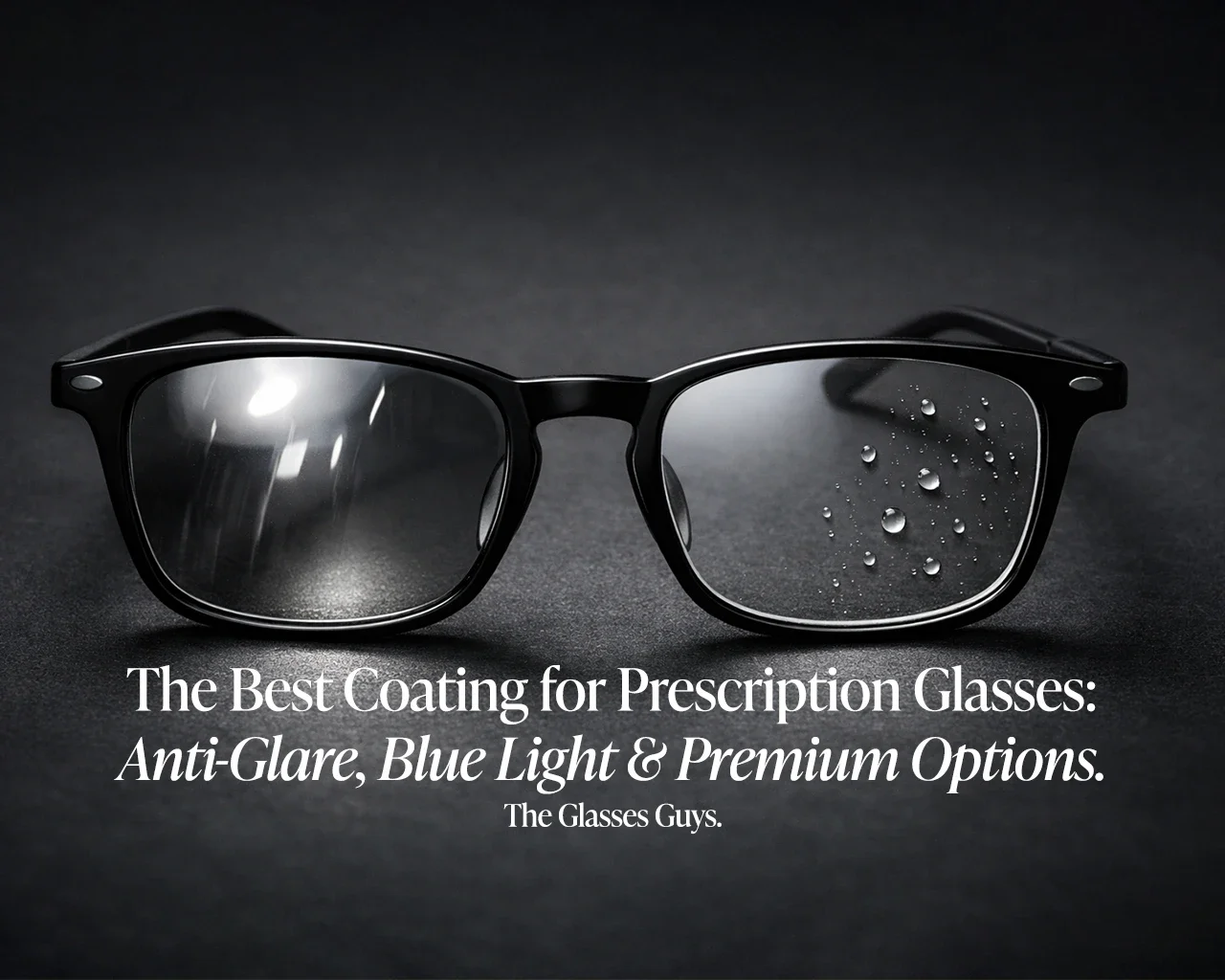
Anti-Glare, Blue Light & Premium Options Explained (UK Guide)
When ordering new lenses, one of the most common questions we’re asked at The Glasses Guys is:
What is the best coating for prescription glasses?
The honest answer?
There isn’t one “best” coating — only the one that suits how you actually use your glasses.
If you drive at night, work on screens all day, or want lenses that stay cleaner for longer, the right coating can make a noticeable difference.
In this guide, we explain:
What anti-glare coating really does
Whether premium coatings are worth it
If blue light coatings help
The best coatings for night driving
When specialist driving lenses make sense
What Does Anti-Glare Coating Do?
Anti-glare coating (also called anti-reflective or AR coating) reduces reflections from:
Car headlights
Street lighting
Computer screens
Office lighting
Low winter sun
Without anti-reflective coating, a small percentage of light reflects off the surface of your lenses. That reflection reduces clarity and can increase glare — especially in low-light conditions.
Benefits of Anti-Glare Coating
Clearer, sharper vision
Reduced halo effect around lights
Improved night driving comfort
Less eye strain
Lenses look clearer in photos and video calls
For most people, anti-glare coating is no longer optional — it’s a practical upgrade for everyday wear.
What Is Premium Anti-Reflective Coating?
Premium anti-glare coatings are designed for people who wear their glasses all day, every day.
Compared to standard AR coatings, premium versions often include:
Advanced multi-layer reflection control
Improved scratch resistance
Hydrophobic (water-repellent) layer
Oleophobic (grease-resistant) layer
Higher overall light transmission
Who Should Choose Premium?
Daily glasses wearers
People who frequently clean their lenses
Professionals working under bright lighting
Anyone wanting lenses that stay clearer for longer
Premium coatings cost more upfront, but they usually maintain clarity and cleanliness better over time.
Do Blue Light Coatings Help?
Blue light coatings filter a portion of high-energy visible (HEV) light emitted from:
Laptops
Phones
Tablets
LED office lighting
If you spend long hours on screens, blue light coatings can:
Improve visual comfort
Reduce digital eye fatigue
Make prolonged screen use feel less harsh
They do not change your prescription or medically “protect” your eyes — but many people find them more comfortable during extended device use.
If your day involves heavy screen time, blue light + anti-glare is often a sensible combination.
What Is the Best Coating for Night Driving in the UK?
Night driving glare is one of the most common complaints we hear.
Standard anti-glare coating helps — but for regular night drivers, specialist options can provide greater comfort.
1️⃣ Aktiv Drive Coating – Practical Night Driving Upgrade
Aktiv Drive is a specialist coating that enhances glare control beyond standard AR.
It can help:
Reduce headlight dazzle
Improve contrast in low light
Minimise glare from modern LED headlights
This is a strong mid-range option for people who drive regularly at night but don’t need a fully specialist lens.
2️⃣ Hoya EnRoute Pro – Specialist Driving Lens
Hoya EnRoute Pro is a dedicated driving lens designed for low-light conditions.
It features:
Subtle contrast-enhancing tint
Advanced glare control
Improved clarity in dark environments
If night driving is a serious concern, this is often the most effective option for maximum comfort and clarity.
Quick Comparison: Which Coating Is Right for You?
| Main Use | Recommended Coating |
|---|---|
| Everyday wear | Premium anti-glare |
| Budget option | Standard anti-glare |
| Office / screen work | Anti-glare + blue light |
| Regular night driving | Aktiv Drive |
| Maximum night clarity | Hoya EnRoute Pro |
Can You Add Anti-Glare When Reglazing Glasses?
Yes.
If you’re replacing lenses in your existing frames, anti-glare and premium coatings can be added during the reglazing process.
That means you don’t need new frames to upgrade your lens performance — just the right coating combination.
Final Thoughts: What’s the Best Coating for Prescription Glasses?
There isn’t a universal “best” coating — only the best one for your lifestyle.
Drive frequently? Prioritise glare control.
Use screens all day? Consider blue light.
Want long-lasting clarity? Choose premium anti-glare.
The key is selecting coatings based on how you actually use your glasses — not simply choosing the most expensive option.
If you’re unsure which coating suits your needs, professional advice makes the decision much easier.